Kannada Wedding Rituals and Functions, Start to Finish
Every Kannada wedding function in order, from Nischitartha to the banana-leaf lunch, with planning tips for Bangalore couples and families.
In this guide
- What are the main functions in a Kannada wedding?
- What is Nischitartha, the Kannada engagement?
- How do you pick the muhurtha date?
- What happens at Naandi?
- What is Arishina, the haldi function?
- When is the reception held?
- What is Kashi Yatre?
- What is Dhare Herdu?
- What are Mangalya Dharane and Saptapadi?
- How many days does a Kannada wedding take?
- What is the lunch after the muhurtha?
- How should you choose a venue for a Kannada wedding?
- How do you design the mantapa?
- How do you plan the wedding day timeline?
- Quick checklist for Kannada wedding functions
A Kannada wedding is easy to follow once you see how the functions fit together: a few quiet family rituals, one fun ritual with the groom setting off for Kashi, and then the muhurtha itself, usually in the morning, followed by a banana-leaf lunch. Here is the whole sequence, in the order most Bangalore families hold it, with what to plan for each function.
Every family does things a little differently, depending on community, village and the family priest. Use this as a planning map, and confirm the details with your elders and priest.
What are the main functions in a Kannada wedding?
Most Kannada weddings include seven main functions: Nischitartha (engagement), Naandi, Arishina (haldi), the reception, Kashi Yatre, Dhare Herdu, and Mangalya Dharane with Saptapadi. The order of the reception varies, as we explain below. You can also see each function on our Kannada wedding planning page.
What is Nischitartha, the Kannada engagement?
Nischitartha is the formal engagement. The two families meet, exchange gifts and fix the wedding. It is often the first time both sides sit together to discuss the date, so it is a good moment to ask your priest to check the shortlist of dates.
Planning tip: decide with both families how large the guest list should be, so the wedding invitation list stays manageable.
How do you pick the muhurtha date?
The muhurtha is fixed by your family priest from the couple's horoscopes, and it is written into the lagna patrike, the wedding invitation. The date drives everything else: the venue, the caterer, the decorators and your guests' travel.
Families usually avoid Dhanurmasam and Chaturmas. In 2027, Dhanurmasam runs from 15 December 2026 to 14 January 2027, and Chaturmas from 14 July 2027 to 31 October 2027, so good dates are concentrated in the months in between. Our Kannada muhurat calendar for 2027 lists 90 dates from published panchangas. Treat it as a shortlist and confirm the exact date and time with your priest.
Good dates book out first, so fix your venue as early as you can. If you are unsure how to sequence everything, read our guide to choosing a wedding planner in Bangalore.
What happens at Naandi?
Naandi is the set of prayers held at both homes that opens the wedding rituals and seeks the blessings of the elders. It is a family occasion, usually at home, so ask your priest what he needs and make sure the elders can arrive early.
What is Arishina, the haldi function?
Arishina is the turmeric ceremony. Turmeric is applied to the bride and the groom, usually the day before the wedding,. Turmeric yellow with fresh flowers makes a simple, bright setting.
If you want ideas for the setting, browse the mandap designs for floral colours and structures that translate well to a haldi corner.
When is the reception held?
The reception is often held on the evening before the muhurtha, but some families hold it the evening after. For a morning muhurtha the evening-before reception is popular: guests who travelled in can meet the couple, and the muhurtha morning starts without a rush. Pick the order with both sets of parents, because it changes your venue booking, the number of nights you need the hall and the way you stage the day.
For the reception stage, our stage decoration designs are a good place to start.
What is Kashi Yatre?
Kashi Yatre is the most playful moment of a Kannada wedding. The groom sets off for Kashi in jest, as if giving up the world for a life of study, and the bride's family stops him and brings him back with the promise of a bride. It is a lovely moment for photos and video.
Planning tip: tell your photographer and videographer about it in advance. It is a short moment, so it is easy to miss if the crew is elsewhere. Our wedding glossary has a short explanation you can share with friends who have not seen it before.
What is Dhare Herdu?
Dhare Herdu is the moment the bride's parents give her hand to the groom, as water is poured over their joined hands. It is often the most emotional ritual. The couple sit on the mantapa, the priest leads the chanting and both families stand close.
Planning tip: keep the area around the mantapa clear so that parents and elders can sit comfortably, and brief the sound team to keep the priest's chanting audible without drowning it in music.
What are Mangalya Dharane and Saptapadi?
Mangalya Dharane is the tying of the mangalsutra at the muhurtha, followed by Saptapadi, the seven steps the couple take together. The muhurtha itself is usually in the morning, so the mantapa, decor and kitchen all start well before dawn. If you have ever wondered why venue staff ask for early access, this is the reason.
How many days does a Kannada wedding take?
Usually two. The first day has the reception and evening rituals. The second day has Kashi Yatre, Dhare Herdu and the muhurtha in the morning, followed by lunch. Some families add the engagement and haldi on earlier days, so the full celebration can run longer.
What is the lunch after the muhurtha?
A banana-leaf oota, served in rows after the muhurtha, is the heart of the day. Guests are seated in batches, so the caterer needs to know how many batches you expect and how fast the kitchen can serve each one. Brief your caterer on the menu and the seating plan together, and ask the venue whether it has its own kitchen.
How should you choose a venue for a Kannada wedding?
Look for a kalyana mantapa or banquet hall that suits a morning muhurtha followed by a sit-down lunch. A hall with its own kitchen makes the early start and lunch service easier. Wedsy has 277 venues across Bangalore, and you can start with banquet halls in Bangalore and narrow by area.
Questions to ask before you book:
- Is the hall available from the evening before until after lunch on the muhurtha day?
- Can we start setting up the mantapa before dawn?
- Do you have a kitchen, and can we bring our own caterer?
- How many guests can be seated for lunch at one time?
- What are the parking arrangements for guests?
- What is your cancellation and date-change policy?
How do you design the mantapa?
The mantapa is where the main rituals happen, so it needs to look good in morning light and to give the priest and families room to sit. Rosettes, garlands and hanging flowers work well in a Kannada setting, and brass lamps and vessels fit the rituals naturally.
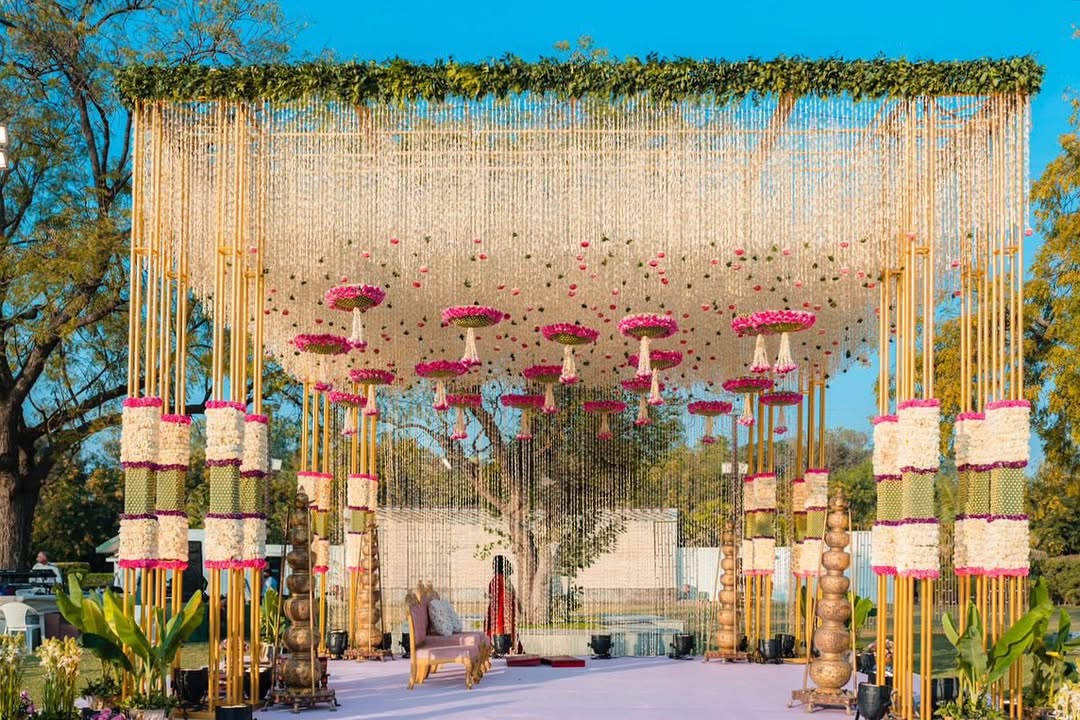
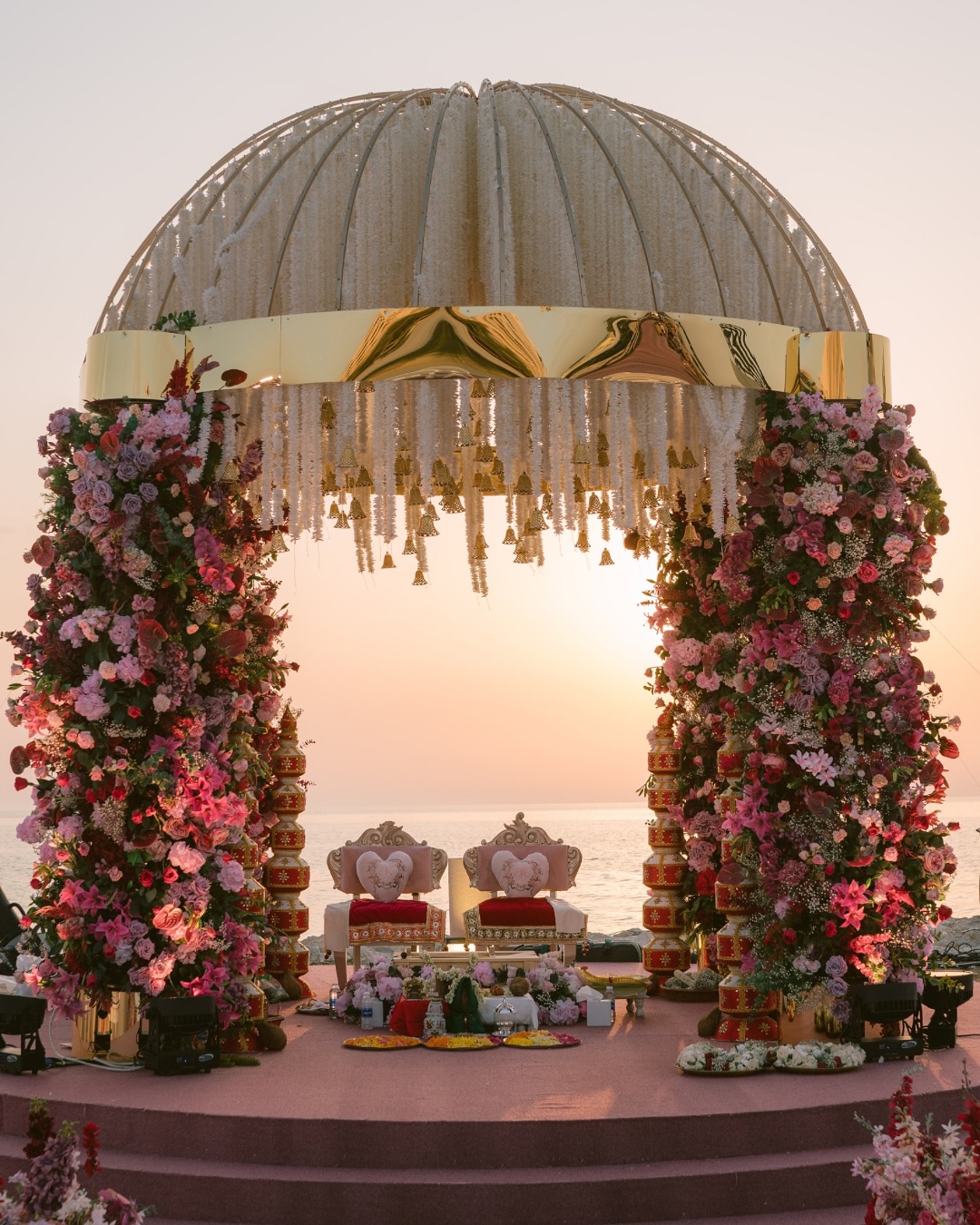
Whichever design you pick, check the seating for the priest and for parents during Dhare Herdu, and make sure there is a clear path for the Kashi Yatre moment.
How do you plan the wedding day timeline?
Work backwards from the muhurtha. Fix the exact time with your priest, add the time for the rituals before it, then plan the decor, catering and guest arrival around that. A planner can hold the whole timeline for you, which is what our wedding planners in Bangalore do: one planner runs every function, every vendor and the day itself, for a fixed planning fee of ₹35,000–₹50,000 for the whole wedding, with no vendor commission. We have 20+ years in Indian weddings and a 4.7★ rating on Google.
Here is a simple order that works for most couples:
- Shortlist dates with your priest, then confirm one.
- Book the venue for the evening before and the muhurtha day.
- Decide the reception order with both families.
- Brief the caterer on the menu and lunch batches.
- Book the decor, photographer and videographer, and tell them about Kashi Yatre and Dhare Herdu.
- Send the lagna patrike and confirm travel for out-of-town guests.
Quick checklist for Kannada wedding functions
| Function | When | What to plan |
|---|---|---|
| Nischitartha | Before the wedding | Small hall or home, gift exchange, date discussion |
| Naandi | Start of the rituals | Priest, vessels, flowers, elders present |
| Arishina (haldi) | Usually the day before | Turmeric, a simple setting, family seating |
| Reception | Evening before or after | Hall, stage, dinner, guest list |
| Kashi Yatre | Wedding morning | Photographer briefed, clear entrance path |
| Dhare Herdu | Wedding morning | Seating for parents, sound for the priest |
| Mangalya Dharane and Saptapadi | At the muhurtha | Early setup, exact timing from the priest |
| Banana-leaf lunch | After the muhurtha | Caterer, seating batches, kitchen access |
Plan the functions around the muhurtha, brief everyone who needs to know the order, and leave the small variations to your family priest and elders.