Tamil Wedding Rituals and Functions, Start to Finish
Every Tamil wedding function in order, from Nichayathartham to the thali, with what to plan for each in Bangalore.
In this guide
- What are the main functions in a Tamil wedding?
- What is Nichayathartham, the Tamil engagement?
- How do you pick the muhurtham date and time?
- Why are many Tamil weddings held in the morning?
- What are Pandakkal Muhurtham and Sumangali Prarthanai?
- What is Janavasam?
- What happens on the morning of the wedding?
- What is Kashi Yatra?
- What are Maalai Maatral and Oonjal?
- What happens at Kanyadaanam and Mangalya Dharanam?
- What happens after the thali is tied?
- What should you plan for the food?
- What should you ask the venue before you book?
- How do you keep all these functions organised?
A Tamil wedding runs on the muhurtham, the auspicious time your priest fixes for the thali to be tied. Everything before it prepares the families and the couple, and everything after it is celebration. Here is the whole sequence in the order most Bangalore families follow, with what to plan for each function.
Traditions differ between communities and even between families, so use this as a planning map and confirm the details with your elders and your priest.
What are the main functions in a Tamil wedding?
Most Tamil weddings include Nichayathartham (the engagement), Pandakkal Muhurtham, Sumangali Prarthanai, Janavasam, Mangala Snanam, Kashi Yatra, Maalai Maatral, Oonjal, Kanyadaanam, Mangalya Dharanam (the thali), Saptapadi, Ammi Mithithal and a reception. Not every family holds all of them, and some add a sangeet or mehendi evening. You can see how we plan each tradition on our Tamil wedding planning page.
What is Nichayathartham, the Tamil engagement?
Nichayathartham is when the two families formally confirm the match. Betel leaves, coconuts, fruit, turmeric and gifts are exchanged, and the wedding invitation text, the lagna pathrikai, is read out and shared. It is also the right moment to settle the rough guest list on both sides, because that number decides which venue you can look at.
If the families plan to hold it in a hall, browse our Bangalore wedding venues early, as a good hall can be booked many months ahead.
How do you pick the muhurtham date and time?
Your family priest fixes the date and time from the couple's horoscopes and the panchangam. The date then drives the venue, the caterer, the decorators and your guests' travel. Many Tamil families avoid months such as Aadi and Margazhi for the wedding, so ask your priest which months your family follows before you shortlist halls.
Our Tamil muhurat dates for 2027 is a useful shortlist to take to your priest. Treat it as a starting point and confirm the exact date and time with him.
Why are many Tamil weddings held in the morning?
The muhurtham often falls in the early morning, and in many families the main ceremony is done well before lunch. That changes your planning: the bride and groom may need to start getting ready before dawn, the decor must be finished the previous night, and the venue needs to open early for the decorators, the priest and the kitchen. Ask any hall about access times before you book, not after.
What are Pandakkal Muhurtham and Sumangali Prarthanai?
Pandakkal Muhurtham is a small ritual, held some days before the wedding, where a symbolic post is planted to invite blessings and mark the start of the wedding preparations. Sumangali Prarthanai is a prayer in which married women of the family are honoured and the elders of the family are remembered. Both are usually family-only events at home, so they need very little planning beyond a priest and a few helpers.
Planning tip: tell the priest what he needs to bring and what the family must arrange. Items like the post, kolam powder, flowers and betel leaves are easy to forget when everyone is busy with invitations.
What is Janavasam?
Janavasam is the groom's welcome, usually on the evening before the wedding. The groom is taken in a decorated procession to the venue, often with nadaswaram and thavil music, and the bride's family greets him and his family. It is a lively moment that guests enjoy, and a good time for the first photographs of both families together.
Planning tip: keep the entrance clear and welcoming, with a place for the musicians to stand. Our reception stage designs and entrance ideas help you plan the first impression guests get.
What happens on the morning of the wedding?
The day often begins with Mangala Snanam, a ritual oil bath, after which the couple dress in the new clothes set aside for the muhurtham. In many families the bride wears a silk saree and the groom a veshti, and the families gather at the hall. Allow generous time for dressing, hair, flowers and make-up, because the muhurtham will not wait.
What is Kashi Yatra?
Kashi Yatra is a light-hearted ritual. The groom sets off, umbrella and walking stick in hand, saying that he will go to Kashi to study and live as a renunciate. The bride's father stops him and persuades him to return and marry his daughter. Guests love it, so tell the photographer and videographer when it is due.
What are Maalai Maatral and Oonjal?
In Maalai Maatral the bride and groom exchange garlands, often several times, while family members lift them playfully and cheer. In Oonjal the couple sit on a swing while women sing traditional songs and offer milk and banana. Both are cheerful, noisy rituals, so brief your sound team that this is the time for music and not just the priest's chanting.
Planning tip: keep the swing or seating ready at the stage before the hall fills up, and agree who will manage the garlands so they are fresh and the right size.
What happens at Kanyadaanam and Mangalya Dharanam?
In Kanyadaanam the bride's parents give her hand to the groom, and it is often the most emotional moment of the day. At the muhurtham the groom ties the thali, the mangalsutra, to the bride while the nadaswaram and drums rise to a crescendo, known as kettimelam, and the guests shower the couple with rice and flowers.
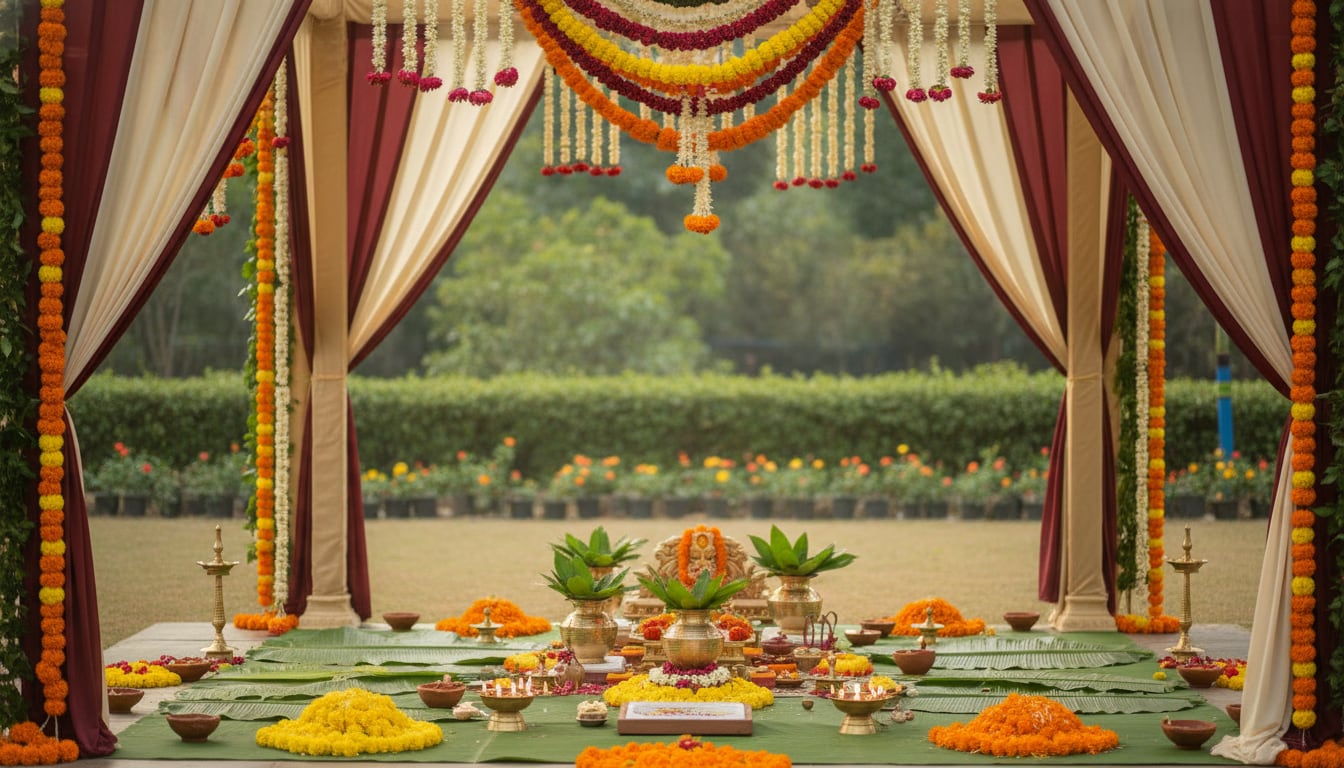
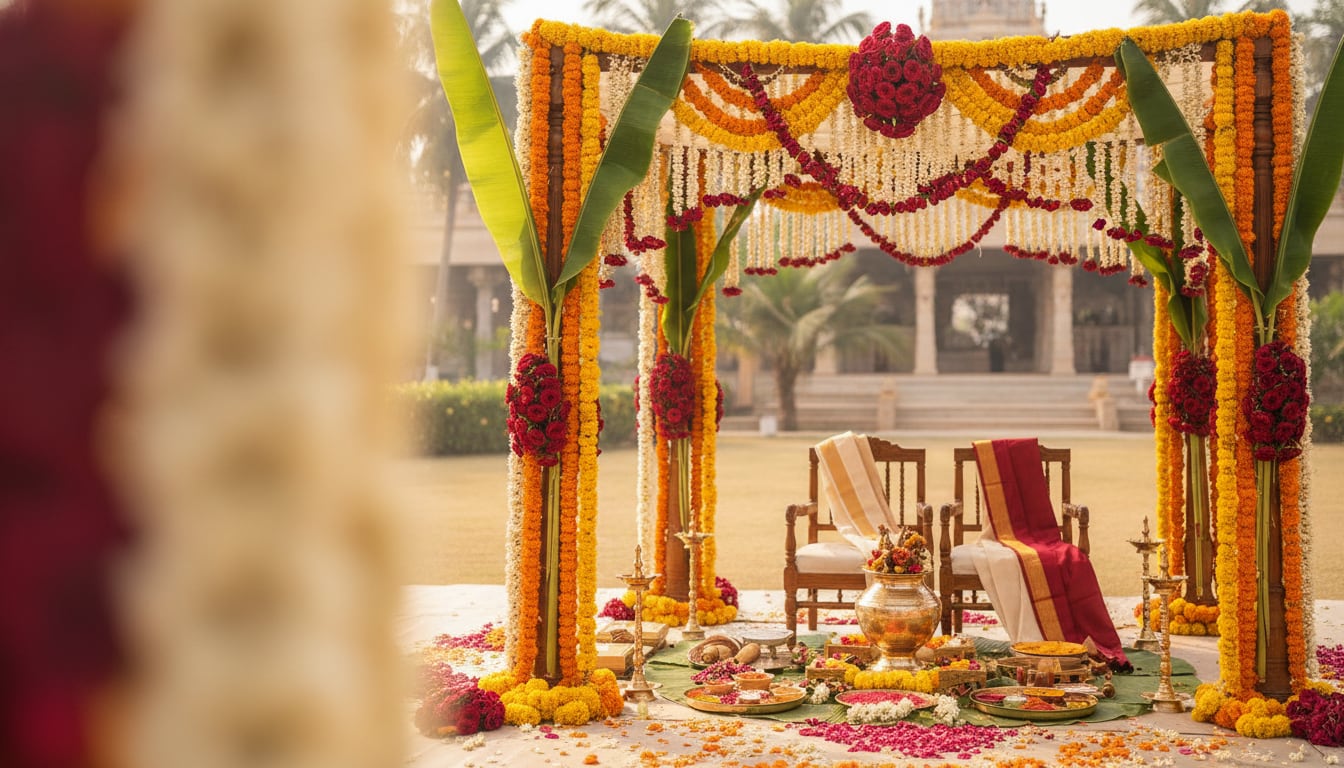
Planning tip: keep the area around the mandap clear so parents and elders can sit comfortably, and tell the photographer and the venue staff the muhurtham time to the minute. Every other function can slip a little, but this one cannot. Our wedding mandap designs are a good place to start your decor.
What happens after the thali is tied?
The couple take the seven steps together (Saptapadi) around the sacred fire, and the priest completes the homam. Many families then hold Ammi Mithithal, where the groom guides the bride's foot onto a grinding stone, and the couple are shown the Arundhati star as a symbol of a steady marriage. The newly married couple are then welcomed to the groom's home with a small Pravesham ceremony, and families often hold a reception the same evening or the day after.
What should you plan for the food?
Many Tamil families serve a traditional vegetarian meal on banana leaves after the muhurtham, so the kitchen has to be ready to serve soon after the ceremony ends. Confirm with your caterer how many guests are served in each sitting and how long a sitting takes, because that decides how fast the hall empties for the next batch.
What should you ask the venue before you book?
Ask about the venue's rules and facilities before you pay an advance. A good list to start with:
- Can the hall be opened early, and for how many hours before the muhurtham?
- Is there a separate room where the bride and groom can dress and rest?
- Can the venue host a traditional banana leaf meal, and can you bring your own caterer?
- Are nadaswaram musicians, a fire for the homam and a sound system allowed?
- How many cars can park, and is there a place for the Janavasam procession to arrive?
- What is the cancellation policy if the priest changes the date?
How do you keep all these functions organised?
A Tamil wedding has several small functions, and each has its own timing, people and items. We suggest writing a one-page schedule for the wedding week and sharing it with the priest, the caterer, the decorators and the photographers. Our month-by-month Bangalore wedding checklist shows what to do and when.
If you would rather hand the coordination to someone, a wedding planner in Bangalore can brief every vendor and stay with you through the week. We have more than 20 years in Indian weddings, and one planner runs your whole wedding. Our guide on how to choose the best wedding planner in Bangalore explains what to look for.