Telugu Wedding Rituals and Functions, Start to Finish
Every Telugu wedding function in order, from Nischitartham to Talambralu, with planning tips for Bangalore couples and families.
In this guide
- What are the main functions in a Telugu wedding?
- What is Nischitartham, the Telugu engagement?
- How do you pick the muhurtham date and time?
- Why are some Telugu weddings held late at night or before dawn?
- What are Pellikuthuru and Pellikoduku?
- What are Snathakam and Kashi Yatra?
- What happens at Gauri Puja?
- What is Kanyadaanam?
- What is Jeelakarra Bellam?
- What are Mangalya Dharana and Talambralu?
- What happens after the main ceremony?
- When is the reception held?
- How should you plan the venue for a Telugu wedding?
- Do you need a planner for a Telugu wedding?
A Telugu wedding is built around one exact moment: the muhurtham, the time your priest fixes for the wedding itself. Everything before it prepares the couple and the families, and everything after it is celebration. Here is the whole sequence in the order most Bangalore families follow, with what to plan for each function.
Every family does things a little differently, depending on community, region and the family priest. Use this as a planning map and confirm the details with your elders and your priest.
What are the main functions in a Telugu wedding?
Most Telugu weddings include Nischitartham (engagement), Pellikuthuru and Pellikoduku (the turmeric and blessing ceremonies), Snathakam and Kashi Yatra, Gauri Puja, Kanyadaanam, Jeelakarra Bellam, Mangalya Dharana with Talambralu, and a reception. You can see each function on our Telugu wedding planning page.
What is Nischitartham, the Telugu engagement?
Nischitartham is when the two families confirm the match and the date. Gifts are exchanged and the priest is usually asked to check the shortlisted dates against both horoscopes. It is the best moment to agree on the rough guest list with both sides, because that number decides the venue.
If you are planning a stage for the engagement, our engagement stage designs are a good place to start.
How do you pick the muhurtham date and time?
Your family priest fixes the lagnam from the couple's horoscopes, and the date and time go on the invitation. The date drives the venue, the caterer, the decorators and your guests' travel.
Families usually avoid Dhanurmasam and Chaturmas. In 2027, Dhanurmasam runs from 15 December 2026 to 14 January 2027 and Chaturmas from 14 July 2027 to 31 October 2027. Our Telugu muhurat calendar for 2027 lists 90 dates from published panchangas, with the most in May. Treat it as a shortlist and confirm the exact date and time with your priest.
Why are some Telugu weddings held late at night or before dawn?
The muhurtham follows the lagnam the priest fixes, and in many seasons the best lagnam falls late at night or in the small hours. That changes the logistics: the venue needs access for the whole night, the lights, sound and kitchen have to run through it, and guests need meals timed around the muhurtham. Ask about this before you book a hall, not after.
What are Pellikuthuru and Pellikoduku?
These are the ceremonies held separately for the bride (Pellikuthuru) and the groom (Pellikoduku) before the wedding. Turmeric is applied, elders bless the couple and the day is usually kept for family. Many families hold them at home or in a small hall the day before.
Planning tip: a simple, bright setting works well, with yellow flowers and a comfortable seating area for elders. Browse our haldi stage designs for ideas.
What are Snathakam and Kashi Yatra?
Snathakam is a ritual marking the groom's readiness to start married life. It ends with Kashi Yatra, where the groom sets off in jest for Kashi to live as a student, and the bride's father stops him and brings him back with the offer of his daughter's hand. It is a short and funny moment, and easy to miss.
Planning tip: tell your photographer and videographer when it will happen. Our wedding glossary has short explanations you can share with friends who have not seen these rituals before.
What happens at Gauri Puja?
While the groom's party arrives, the bride prays to Goddess Gauri. It is a quiet ritual before the main ceremony, so keep the bride's dressing room close to the mandap and give her time to be ready without a rush.
What is Kanyadaanam?
Kanyadaanam is when the bride's parents give her hand to the groom. It is often the most emotional ritual of the day. The priest leads the chanting and both families gather close.
Planning tip: keep the area around the mandap clear so that parents and elders can sit comfortably, and brief the sound team to keep the priest's chanting clear without drowning it in music.
What is Jeelakarra Bellam?
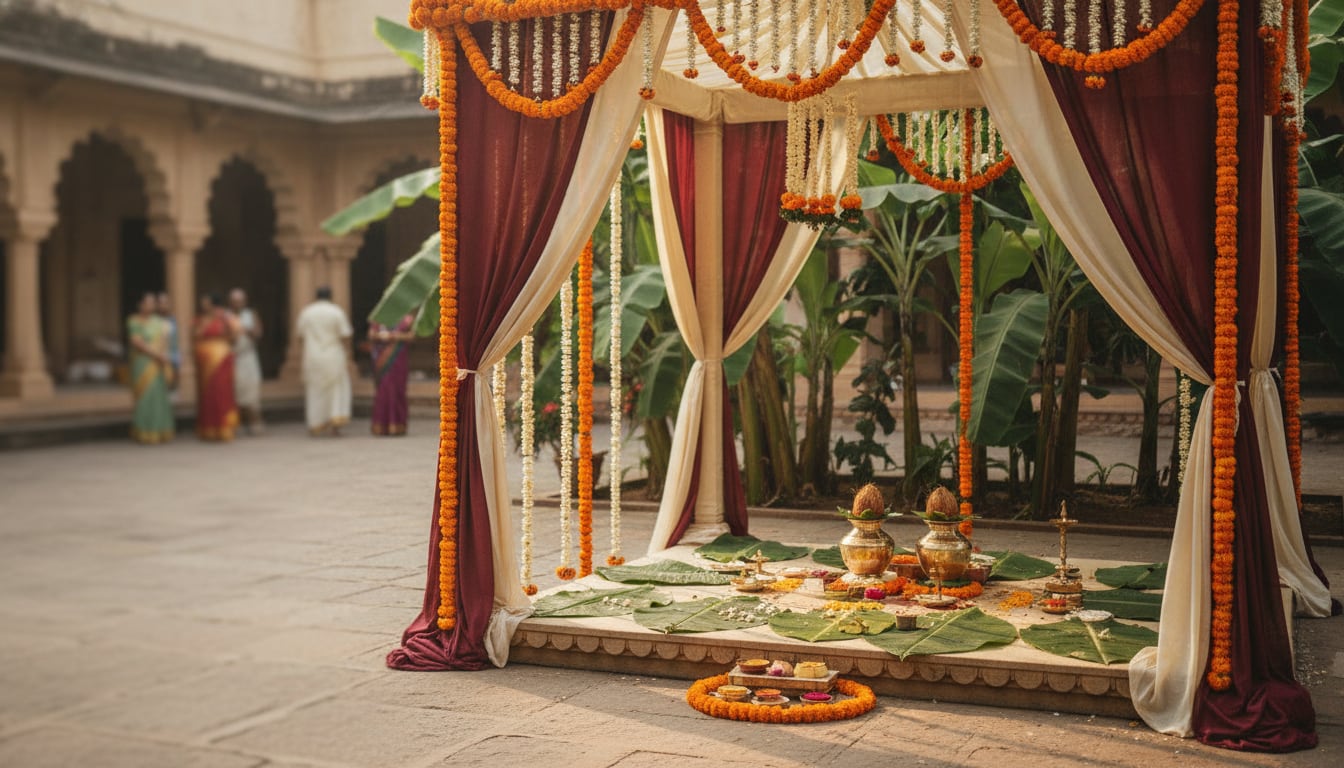
At the exact muhurtham, the bride and groom place a paste of cumin (jeelakarra) and jaggery (bellam) on each other's heads. In Telugu tradition this is the moment the wedding takes place. The curtain between the couple is lowered and the whole hall turns to watch.
Planning tip: tell the photographer and the venue staff the muhurtham time to the minute. Every other function can slip a little, but this one cannot.
What are Mangalya Dharana and Talambralu?
Right after Jeelakarra Bellam, the groom ties the mangalsutra, which is Mangalya Dharana. Then comes Talambralu, when the couple pour rice mixed with turmeric (and often pearls) over each other's heads while the families cheer. It is a playful ritual and one of the most photographed moments of a Telugu wedding.
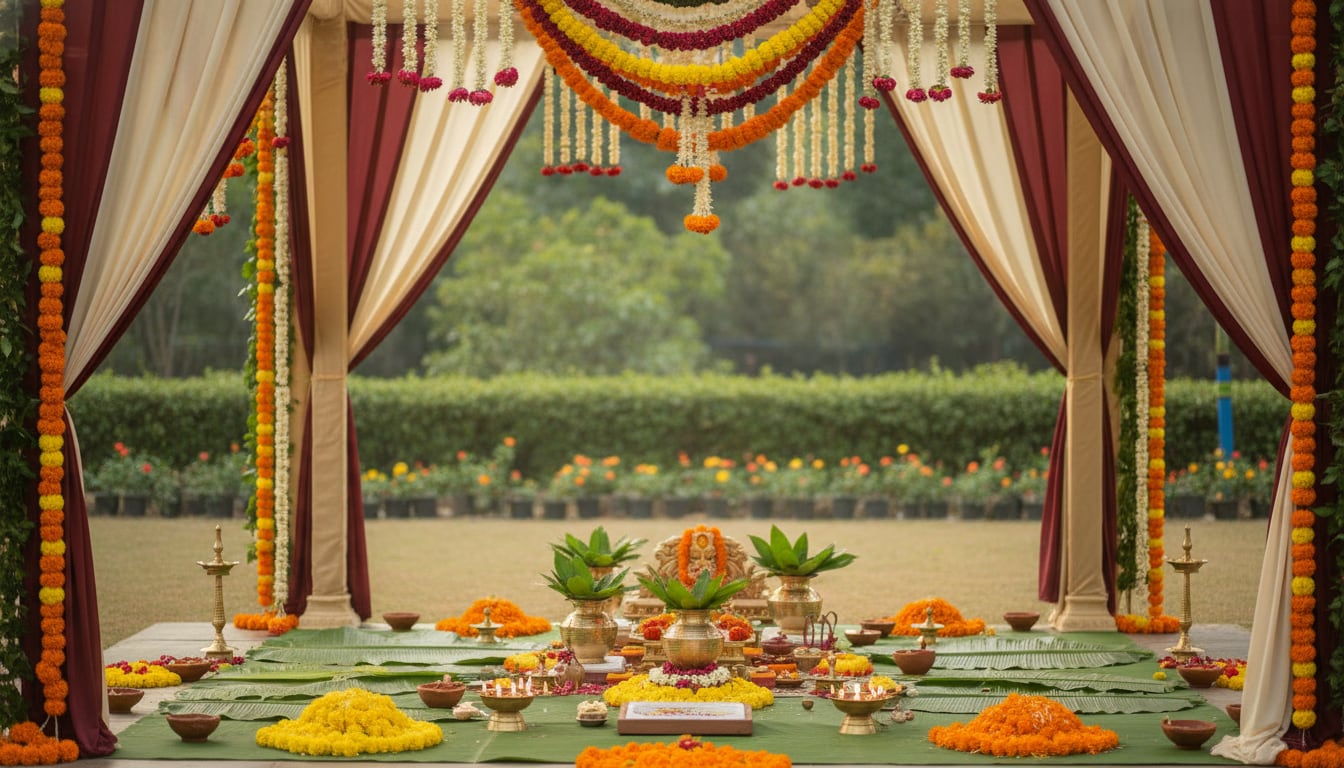
Planning tip: ask your caterer or decorator to keep the rice, pearls and bowls ready at the mandap, so nobody is hunting for them when the priest calls for them.
What happens after the main ceremony?
The couple take the seven steps together (Saptapadi), and many families follow other customs, such as showing the couple the Arundhati star, a feast for guests and the bride's send-off to her new home. Details vary a lot between families, so ask your elders which ones they want to keep and note them in your plan.
When is the reception held?
The reception is an evening for friends, colleagues and the wider family. Many couples hold it on the evening before or after the wedding, depending on the muhurtham time. If the muhurtham is late at night, a reception the next evening can give everyone time to rest. Pick the order with both sets of parents, because it changes how many nights you need the hall. For stage ideas, see our reception stage designs.
How should you plan the venue for a Telugu wedding?
Look for a hall that suits your guest count, allows access for the full time of your lagnam, and has a mandap area where the whole family can see the key rituals. Our banquet halls in Bangalore are a good place to start, and you can filter by area.
Questions to ask the venue before you book:
- Can the hall stay open and staffed through the night if the lagnam is late or very early?
- What are the rules on outside caterers, music and decorators?
- Is there a separate room for the bride and the groom to get ready?
- How many cars can you park, and is there a lift or ramp for elders?
- What is the cancellation and date-change policy?
Good dates book out first. If you are looking at a busy month, start early and keep a back-up venue. Our month-by-month planning checklist shows when to book what.
Do you need a planner for a Telugu wedding?
You do not need one, but a Telugu wedding has many moving parts, and a late-night muhurtham makes the logistics harder. We are a wedding planner in Bangalore with 20+ years in Indian weddings. One planner runs your whole wedding for a fixed planning fee of ₹35,000 to ₹50,000, and we take no commission from vendors. We also negotiate on your behalf with venues. If you are comparing planners, read our guide to choosing a wedding planner in Bangalore.