Mandap Decoration Ideas for South Indian Weddings
Mandap styles, flowers and decorator questions for Kannada, Telugu, Tamil and Malayali weddings in Bangalore, from Wedsy's planners.
In this guide
- What makes a South Indian mandap different?
- What should you decide before choosing a design?
- Which mandap styles work best for a South Indian wedding?
- Which flowers and materials suit a Bangalore wedding?
- Indoor hall or outdoor lawn: how does it change the mandap?
- How do you match the mandap to your tradition?
- Should the reception stage match the mandap?
- Questions to ask your decorator before you book
- Do you need a planner to handle the mandap?
The mandap is where your wedding photographs are made. For a South Indian wedding it is also where the muhurtham actually happens, so it has to look beautiful and work for the ritual. In Bangalore we plan mandaps for Kannada, Telugu, Tamil and Malayali weddings every season, and the ones that go wrong almost always went wrong in the planning, not in the flowers. This guide covers the ideas we like, and the practical decisions behind them.
What makes a South Indian mandap different?
A South Indian mandap is usually built around the ritual rather than around a stage look. Traditional elements such as banana stems, mango leaves, jasmine and marigold strands, brass lamps and carved wooden or brass pillars are common across the four traditions, while the exact customs differ by family and community. Because of that, the best starting point is a conversation with your priest and elders, not a Pinterest board.
What should you decide before choosing a design?
Three things shape every mandap: who sits where, how many people need to be inside, and what time the muhurtham is. The couple, priest and immediate family sit on the mandap for the rituals, and some families want parents or siblings seated close by. Ask your priest what must be placed on or near the mandap, such as the homa kund, kalasham or lamps, and give your decorator that list on day one so the design leaves room for it.
Timing matters too. A morning muhurtham in a hall is lit very differently from an afternoon one on a lawn, and flowers that look fresh at 7 am may be tired by 1 pm in warm weather. Your decorator should tell you which flowers hold up for your timing.
Which mandap styles work best for a South Indian wedding?
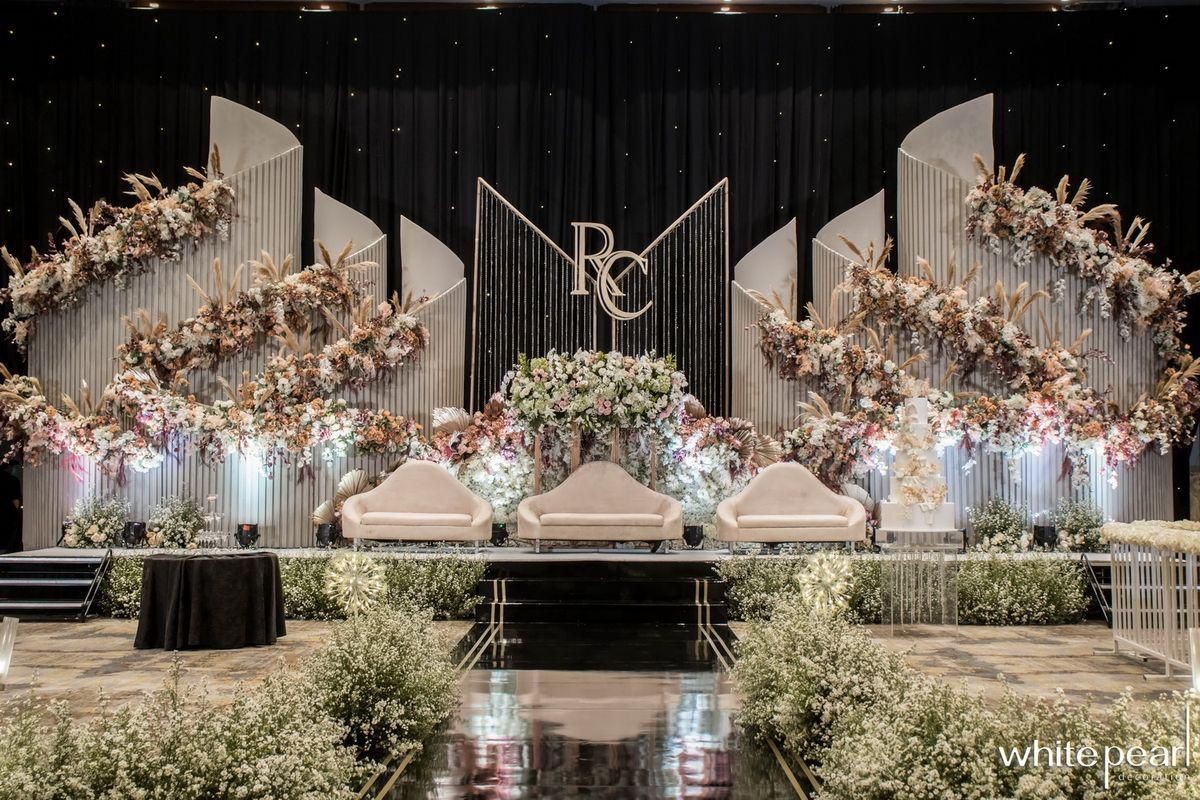
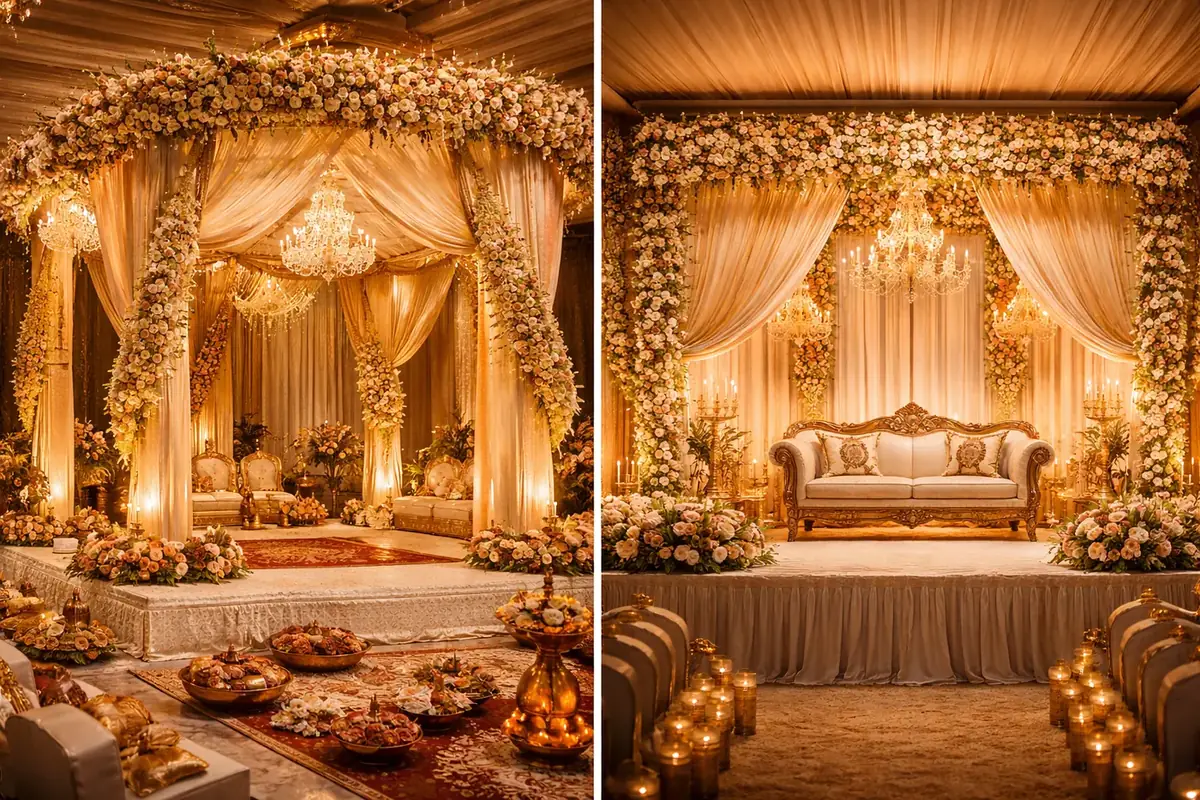
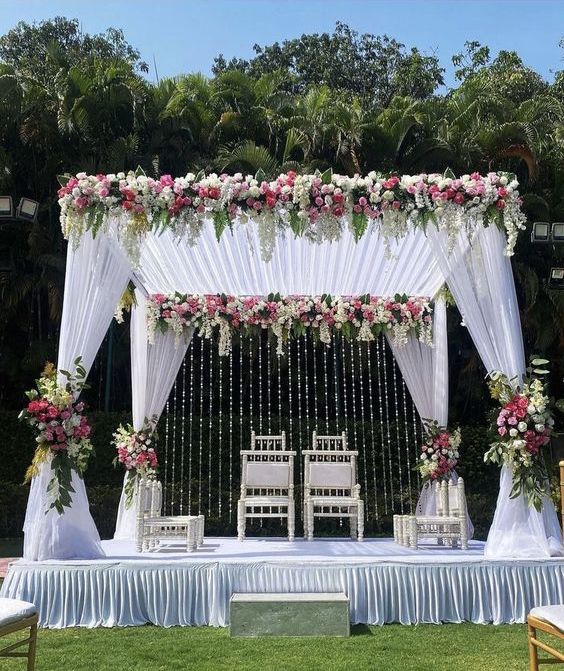
The classic floral mandap
A white drape, a heavy garland of seasonal flowers along the top, and cascading strands behind the seating. It photographs well in almost any venue and is easy to adapt to different colour palettes.
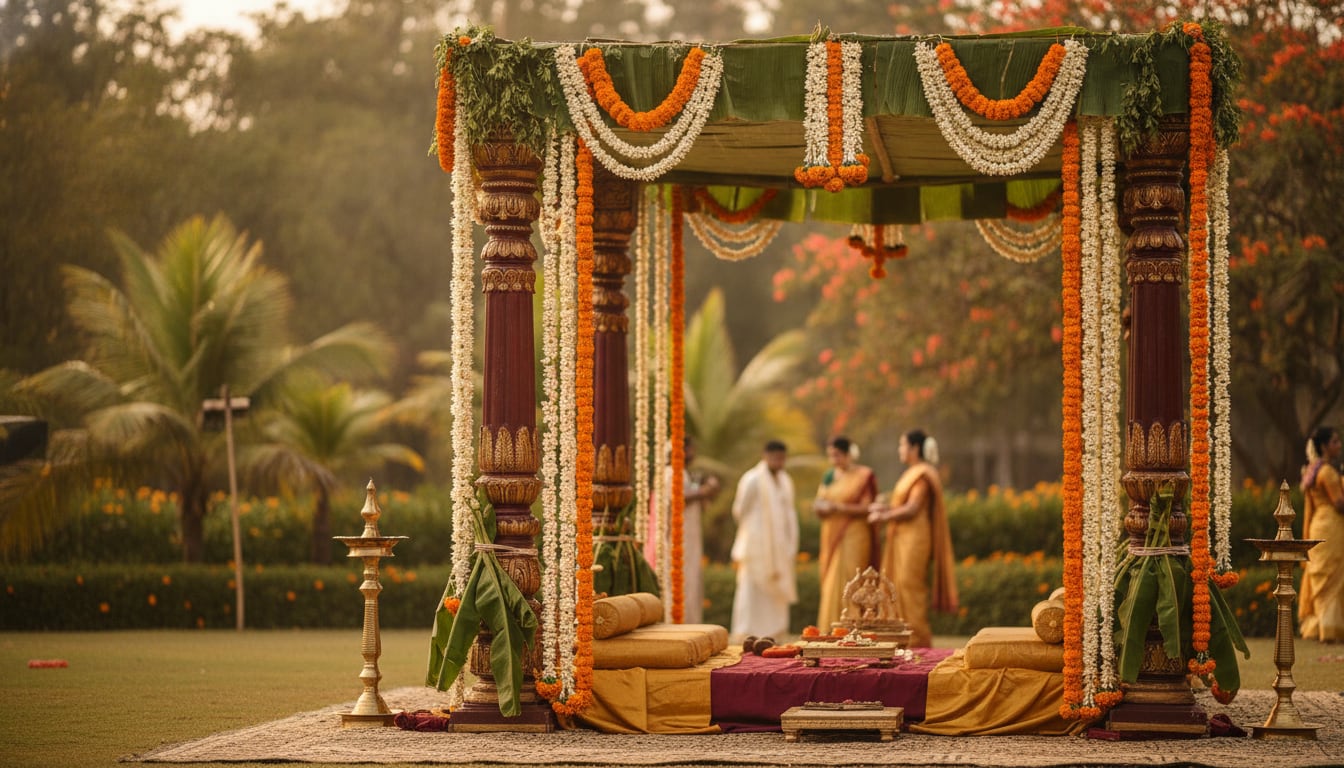
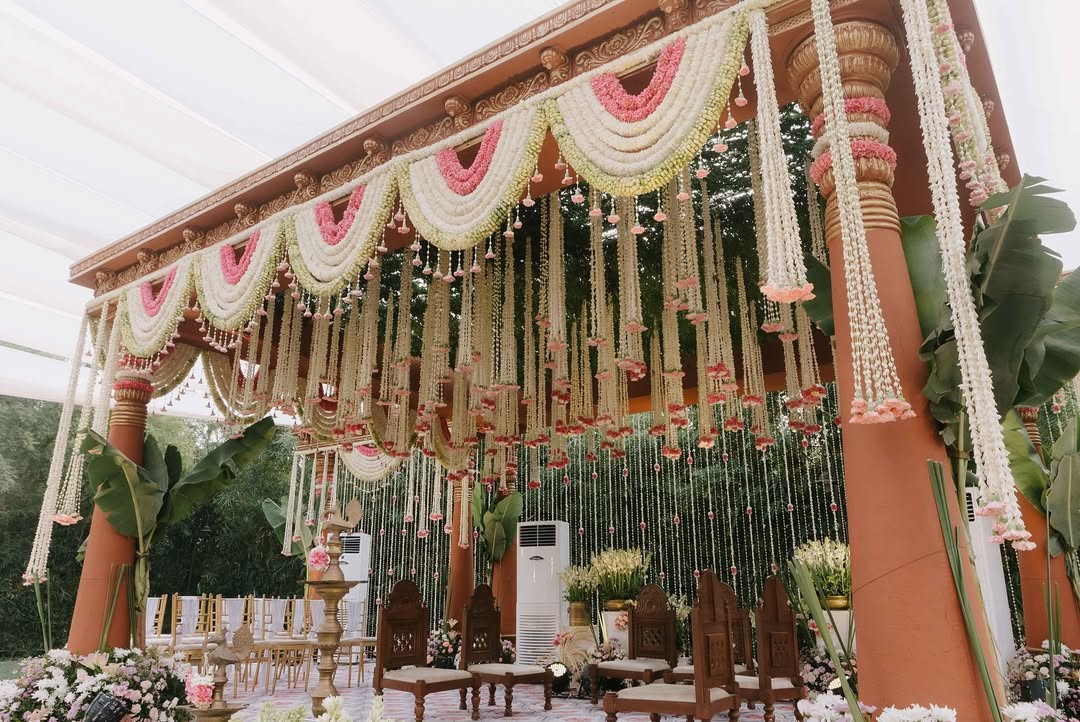
The traditional temple-style mandap
Carved wooden-look pillars, long jasmine strings, banana leaves at the base and a brass lamp beside the seating give a mandap that feels rooted in South Indian temple architecture. This is the look many Kannada, Tamil and Telugu families gravitate to when they want the ritual to feel authentic.
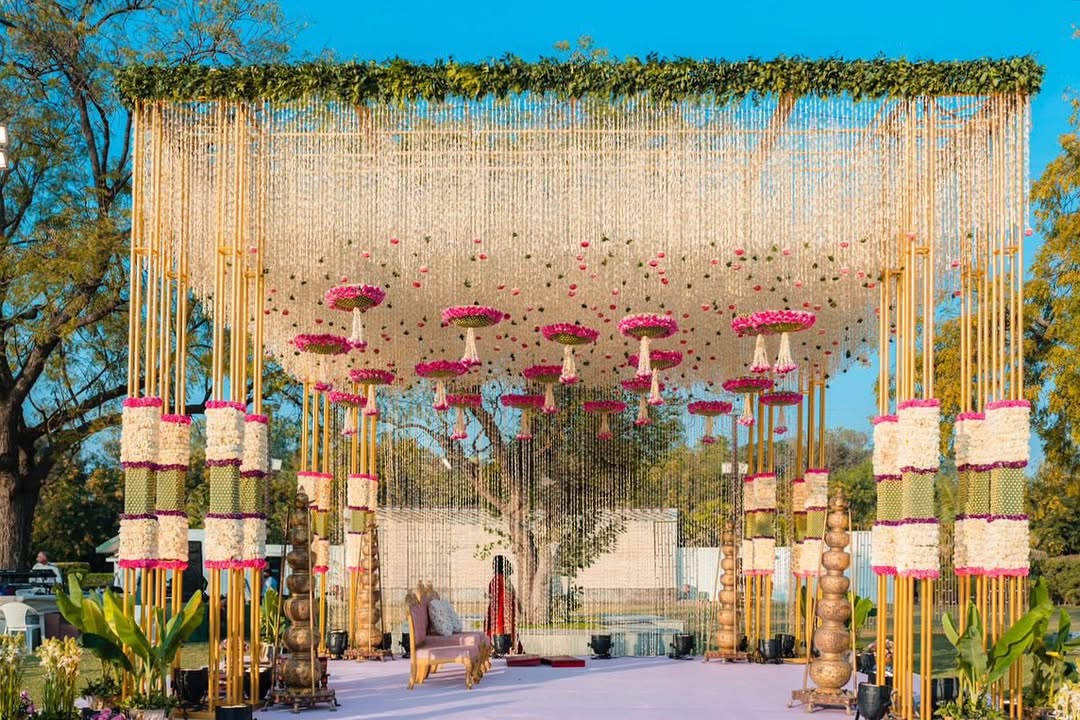
The gold-frame strand mandap
Tall gold poles, a canopy of fine hanging strands and floral accents give a lighter, modern look that still uses jasmine and marigold. It suits couples who want something contemporary without losing the flowers that matter to the family.
You can browse more designs on our mandap decor page. If you are unsure whether you want a mandap or a full stage, our mandap vs stage guide explains the difference.
Which flowers and materials suit a Bangalore wedding?
Jasmine strands, marigolds, roses and tuberose are the staples, with banana stems, mango leaves and betel leaves used for the traditional touches. Fresh flowers give the fragrance and the look people expect, but they are sensitive to heat and long waits. Ask your decorator which elements will be fresh, which will be artificial or fabric, and how they will keep the fresh ones looking good until the muhurtham.
Indoor hall or outdoor lawn: how does it change the mandap?
In a hall, the ceiling height and the existing stage or backdrop decide what is possible, so go and measure before you fall in love with a design. Outdoors, wind, sun and the time of day matter more than the flowers. A tall, open frame can look stunning on a lawn but needs weighting and a plan for wind, and you should always ask the venue about a rain backup. Our guide to venue areas in Bangalore can help you narrow down where you want to be.
How do you match the mandap to your tradition?
The structure often looks similar, but the details come from your family. Read about the ceremonies in our Kannada and Telugu ritual guides, and talk to your elders about anything that needs a specific place on the mandap. Colours matter as well: our colour palette guide will help you keep the mandap, outfits and reception stage working together.
Should the reception stage match the mandap?
They do not need to be identical, but they should feel like one wedding. Many couples keep the same flowers and colours and change the structure for the reception. See our reception stage ideas or browse stage designs to plan both together.
Questions to ask your decorator before you book
- Can I see photos of a mandap you built in a similar venue, at a similar time of day?
- Which flowers will be fresh and which will be artificial?
- What is included: platform, chairs, drapes, lighting, pooja items and the setup and removal?
- What time can you start setting up, and does the venue allow it?
- What is the plan if it rains or the wind picks up?
- Who is on site on the wedding day to fix anything?
- What is the final price in writing, and what changes it?
Do you need a planner to handle the mandap?
You do not, but mandap decisions touch the venue, the priest, the caterer's layout and the photographer's positions, so someone has to coordinate all of them. With a wedding planner in Bangalore, one planner runs the whole wedding and negotiates with venues on your behalf. Wedsy has 20+ years in Indian weddings, a fixed planning fee of ₹35,000 to ₹50,000 for the whole wedding, no vendor commission, a library of 277 venues and a 4.7 Google rating. If you are comparing options, our guide to choosing a wedding planner lists what to look for.